Chemical processing is entering a demanding decade. Plants must produce more reliably while reducing energy use, emissions, waste, and maintenance delays. The International Energy Agency identifies chemicals as the largest industrial energy consumer and a major source of industrial carbon dioxide emissions. That reality makes equipment selection an operational decision, not merely a purchasing exercise.
Deloitte’s 2025 chemical industry outlook also highlights cost pressure, supply-chain uncertainty, digital transformation, and sustainability expectations. These trends affect reactors, heat exchangers, pumps, filtration systems, storage units, and process-control platforms. A capable supplier should provide more than catalog products. It should demonstrate engineering experience, documented quality systems, commissioning support, spare-parts availability, and dependable service across regions.
Safety cannot be treated as a brochure claim. Process-safety authority Trevor Kletz warned, “If you think safety is expensive, try ignorance.” His observation remains practical beside a high-temperature reactor or a pressurized transfer line. Suppliers must therefore be assessed through verifiable certifications, process data, customer references, and lifecycle performance.
This guide examines ten leading chemical processing equipment suppliers worldwide. The comparison considers technology breadth, customization, automation, energy efficiency, after-sales support, and global delivery capability. No ranking is perfect. Regional expertise can matter more than brand visibility. A smaller specialist may outperform a multinational in one application. Readers should still validate specifications against site conditions, local standards, materials compatibility, and total ownership cost. That extra checking may feel slow. It prevents expensive surprises.
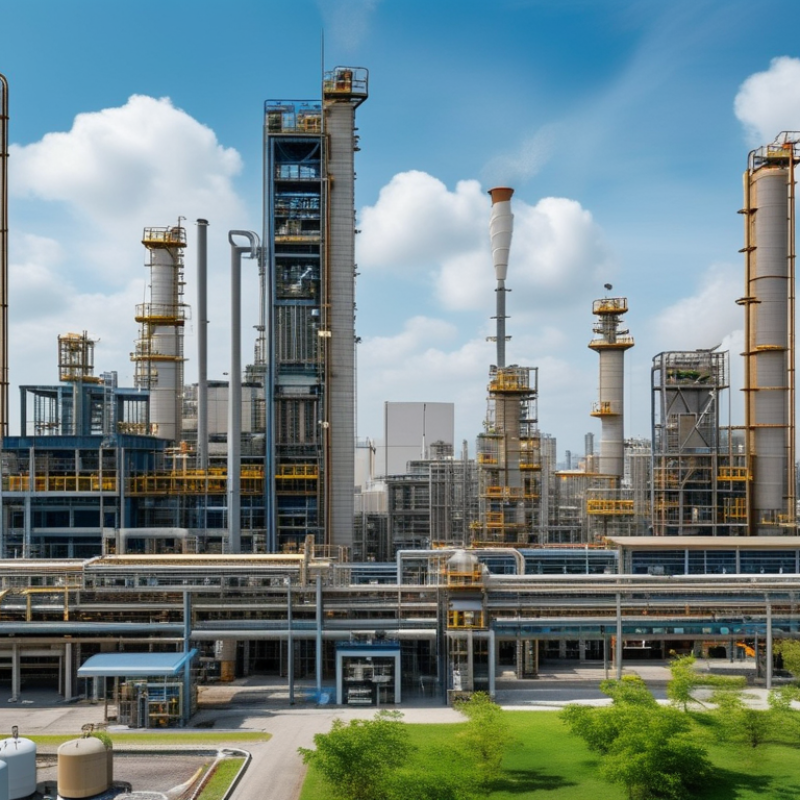
Chemical processing equipment forms the working backbone of modern chemical plants. Its scope spans material reception, dosing, reaction, separation, drying, storage, and waste control. Engineers select equipment by chemistry, temperature, pressure, viscosity, corrosion risk, and required throughput. A small mismatch can cause fouling, unstable batches, or unsafe pressure changes. Laboratory trials and operating history should support major equipment decisions. Catalog ratings alone are not enough.
Common types include stirred reactors, static mixers, heat exchangers, distillation columns, evaporators, centrifuges, filtration systems, pumps, and industrial dryers. Reactors create controlled contact between ingredients. Heat exchangers manage temperature and recover useful energy. Separators remove solids, liquids, or vapors from process streams. Storage tanks protect material quality before the next stage. Stainless alloys, lined steel, glass, and engineered polymers suit different conditions. Material selection requires careful review when acids, solvents, or abrasive slurries are involved.
Applications range from pharmaceutical production and food ingredients to water treatment, coatings, fertilizers, and advanced materials. A supplier should provide traceable documentation, testing records, maintenance guidance, and realistic performance data. Site support also matters. Installation errors can undermine excellent equipment. Even experienced teams may underestimate cleaning time, spare-part access, or operator training. That weakness deserves honest review before purchase.

Choosing among global chemical processing equipment suppliers requires more than comparing catalog prices. Start with the process itself: fluid composition, temperature, pressure, flow rate, and corrosion risk. Ask suppliers to explain their design assumptions in plain language. A credible supplier should provide material certificates, equipment drawings, test records, and a clear change-control process. Look for practical experience with similar fluids, not impressive claims alone. Site visits can reveal workshop discipline, inspection routines, and how technicians handle defects. Small details matter.
Evaluate engineering depth through questions about scale-up, heat transfer, sealing, instrumentation, and cleaning access. Request references from facilities with comparable operating conditions. Speak with technical users, not only sales contacts. Their maintenance history may expose vibration, blocked lines, coating failure, or difficult spare-parts access. Ask how the supplier supports commissioning, operator training, troubleshooting, and emergency response across time zones. Response time should be measured, not promised. Remote support sounds useful, but weak documentation can make it frustrating.
Review total ownership cost over the expected service life. Include energy use, replacement parts, inspection labor, downtime, shipping, and disposal of worn components. Check whether quality systems are independently audited and whether supplied equipment can meet the standards required in its installation country. A supplier may pass a factory test yet perform poorly after installation. That risk is easy to underestimate. I would score each proposal with weighted criteria and record every assumption. The method is not perfect. Real operating data can change the ranking, and that possibility should remain visible.
A practical supplier evaluation framework for chemical processing equipment procurement. The reference weighting reflects the factors commonly assessed during technical, safety, commercial, and lifecycle reviews.
Process performance and operational safety should receive the greatest attention, followed by regulatory compliance, total lifecycle cost, delivery capability, after-sales service, and environmental performance. Buyers can adjust these weights according to project risk, location, and process complexity.
Choosing among the ten leading global chemical processing equipment suppliers requires more than comparing prices. A reliable supplier should understand your process conditions, production volume, materials, and maintenance limits. Ask for evidence from similar installations, not polished claims. Factory visits, operator interviews, and documented performance data can reveal practical strengths.
Technical capability is essential. Review equipment design, corrosion resistance, pressure ratings, automation options, and energy use. The supplier should provide clear drawings, testing procedures, traceable materials, and responsive engineering support. Global authority also matters, but reputation alone is insufficient. Check certifications, safety practices, quality records, delivery performance, and financial stability. A supplier with strong expertise may still struggle with local service coverage. That weakness deserves attention.
Tips: Build a weighted evaluation sheet before contacting suppliers. Give higher scores to lifecycle cost, safety, reliability, and technical support. Request a sample inspection report and a realistic delivery schedule. Ask how failures are handled after commissioning. Be cautious with perfect case studies; real projects usually include delays, revisions, or unexpected maintenance. Your team should challenge assumptions, including its own. The cheapest quotation can become expensive when spare parts, training, and downtime are ignored. Also, a technically advanced system may be unsuitable if operators cannot maintain it confidently.
Chemical processing equipment suppliers differ sharply in engineering depth, delivery speed, and after-sales support. The International Energy Agency reports that petrochemicals could drive more than one-third of global oil-demand growth through 2030. That pressure makes equipment reliability commercially important.
The U.S. Department of Energy identifies chemicals among the most energy-intensive manufacturing sectors. Therefore, buyers should examine lifecycle consumption, not only purchase price. A supplier with strong laboratory testing may still lack dependable commissioning teams.
That weakness matters. Ask for documented factory acceptance tests, material certificates, service response times, and comparable operating references.
The comparison also needs caution: published efficiency figures often use ideal feedstocks and stable production rates. Real plants face fouling, operator changes, and unexpected downtime. In my assessment, transparent assumptions are more credible than impressive but incomplete performance claims.
Chemical processing equipment manufacturing is shifting from volume growth toward measurable efficiency. The International Energy Agency reports that petrochemicals may drive over half of oil demand growth through 2050. This pressure is reshaping reactors, heat exchangers, compressors, and separation units. Manufacturers now prioritize lower energy losses, compact layouts, and easier maintenance.
Digital monitoring is becoming practical, not decorative. Deloitte’s 2024 Global Chemical Industry Outlook identifies digitalization and operational resilience as major investment priorities. Sensors can track vibration, temperature, corrosion, and pressure changes across a plant. Digital twins can test production changes before operators touch a valve. Still, models can mislead when field data is incomplete. That weakness deserves more attention.
Circular production is also influencing equipment design. The United Nations Environment Programme’s Global Resources Outlook 2024 warns that global resource extraction could rise by 60% by 2060 without stronger efficiency measures. Equipment makers are responding with modular skids, recyclable materials, solvent recovery systems, and water-reuse loops. Electrified heating is expanding where clean power is reliable. It remains uneven across regions. A stainless-steel vessel may look efficient, yet poor insulation can quietly waste energy every operating hour. Buyers increasingly request lifecycle evidence, repair access, and verified emissions data. Supplier claims alone are not enough.
| Rank | Anonymous Supplier Profile | Primary Manufacturing Region | Core Equipment Capability | Typical Materials | Common Design Standards | Main End-Use Industries | Digitalization Level | Typical Project Scope | Global Trend Alignment |
|---|---|---|---|---|---|---|---|---|---|
| 1 | Profile A — Integrated Process Systems | Western Europe | Reactors, pressure vessels, mixing systems, skid-mounted process units | Carbon steel, stainless steel, nickel alloys, glass-lined steel | PED, ASME Section VIII, EN 13445, ATEX where applicable | Specialty chemicals, pharmaceuticals, fine chemicals | Advanced | Turnkey and modular systems | Automation, modularization, energy efficiency |
| 2 | Profile B — Large-Scale Separation Equipment | North America | Distillation columns, absorbers, strippers, heat-integrated separation units | Carbon steel, stainless steel, clad plate, high-alloy materials | ASME Section VIII, API recommended practices, ASTM material standards | Petrochemicals, fertilizers, industrial gases | Advanced | Large custom-engineered projects | Energy reduction, process intensification |
| 3 | Profile C — High-Pressure Process Equipment | East Asia | High-pressure reactors, separators, autoclaves, gas-processing vessels | Low-alloy steel, stainless steel, duplex steel, nickel alloys | ASME Section VIII, JIS, GB/T, ISO quality-management requirements | Hydrogen, polymers, refining, synthetic fuels | Intermediate to advanced | Engineered vessels and process packages | Hydrogen readiness, safety monitoring |
| 4 | Profile D — Heat Transfer and Thermal Systems | Northern Europe | Shell-and-tube exchangers, condensers, reboilers, air coolers | Stainless steel, titanium, nickel alloys, carbon steel | TEMA, ASME, EN 13445, API 660 and API 661 where applicable | Chemical production, LNG, power, water treatment | Advanced | Component supply to EPC packages | Waste-heat recovery, electrification |
| 5 | Profile E — Filtration and Solid-Liquid Separation | Central Europe | Pressure filters, centrifuges, filter presses, membrane systems | Stainless steel, polypropylene, PVDF, ceramic membranes | ISO 9001, GMP-compatible design, EHEDG where required | Pharmaceuticals, food chemicals, mining chemicals | Advanced | Standardized and customized units | Water reuse, solvent recovery, lower waste |
| 6 | Profile F — Evaporation and Drying Systems | Southern Europe | Falling-film evaporators, spray dryers, vacuum dryers, crystallizers | Stainless steel, duplex steel, corrosion-resistant alloys | PED, GMP, ATEX, applicable food and pharmaceutical hygiene standards | Pharmaceuticals, agrochemicals, food ingredients | Intermediate to advanced | Pilot, production, and retrofit projects | Heat-pump integration, low-carbon drying |
| 7 | Profile G — Mixing and Powder Processing | East Asia | Agitators, high-shear mixers, ribbon blenders, powder handling systems | Stainless steel, carbon steel, abrasion-resistant linings | CE marking, ATEX where applicable, ISO 9001 | Pigments, coatings, polymers, specialty chemicals | Intermediate | Batch and continuous processing lines | Process control, dust reduction, flexible production |
| 8 | Profile H — Corrosion-Resistant Process Equipment | North America and Western Europe | Glass-lined reactors, fluoropolymer-lined vessels, scrubbers, piping systems | Glass-lined steel, PTFE, PFA, graphite, high-nickel alloys | ASME, PED, ASTM, ISO 9001, chemical-resistance specifications | Acids, agrochemicals, pharmaceuticals, specialty chemicals | Intermediate to advanced | Custom vessels and replacement equipment | Asset life extension, safety, material optimization |
| 9 | Profile I — Modular and Skid-Mounted Plants | Southeast Asia | Metering skids, dosing systems, compact reactors, packaged utilities | Stainless steel, carbon steel, fiberglass-reinforced plastic | ASME, IEC electrical requirements, ISO 9001, local pressure regulations | Water treatment, battery materials, specialty chemicals | Advanced | Modular and rapidly deployable plants | Shorter installation time, remote monitoring |
| 10 | Profile J — Sustainable Process Technology | Global Engineering Hubs | Electrified heaters, carbon-capture units, solvent-recovery systems, heat-recovery equipment | Stainless steel, nickel alloys, membranes, activated carbon, structured packing | ISO 14001, ASME, PED, IEC and project-specific environmental requirements | Low-carbon chemicals, refining, energy, waste processing | Advanced | Retrofit and decarbonization projects | Electrification, emissions reduction, circular production |
Note: The supplier profiles are anonymized industry capability categories rather than company or brand rankings. Applicable standards depend on equipment type, operating conditions, installation location, and project specifications.
Contact our team with questions, product inquiries or challenge us to engineer a solution for you.
Tel: +1 716 433 6764
Fax: +1 716 433 2850
Email: sale@ashymed.com
VanDeMark Chemical Inc.
One North Transit Road
Lockport, NY 14094 USA