China Top 10 Biostimulant Suppliers?

China’s biostimulant sector is attracting attention as growers seek stronger crops, better nutrient use, and more resilience under stress. The global market offers useful context. MarketsandMarkets’ 2022 industry report estimated its value at US$3.1 billion that year and forecast growth to US$4.9 billion by 2027. These are projections, not audited sales figures, and estimates vary by market definition. Still, the direction is clear: suppliers face rising expectations for evidence, consistency, and practical field performance.

China Top 10 Biostimulant Suppliers examines companies serving this evolving market, from product development to manufacturing and export experience. The term itself needs care. In a 2015 paper in Scientia Horticulturae, plant biostimulant researcher Patrick du Jardin defined one as “any substance or microorganism applied to plants with the aim to enhance nutrition efficiency, abiotic stress tolerance and/or crop quality traits, regardless of its nutrients content.” That definition helps distinguish biostimulants from products valued mainly for their nutrient content. A supplier’s claims still need scrutiny. Look for clear ingredient information, credible trial methods, and results tied to specific crops and growing conditions. A laboratory result may not repeat in a dry field or a humid greenhouse. Details matter. No list can capture every local condition, and supplier rankings are imperfect. The companies featured here should therefore be treated as candidates for careful evaluation, not automatic endorsements.
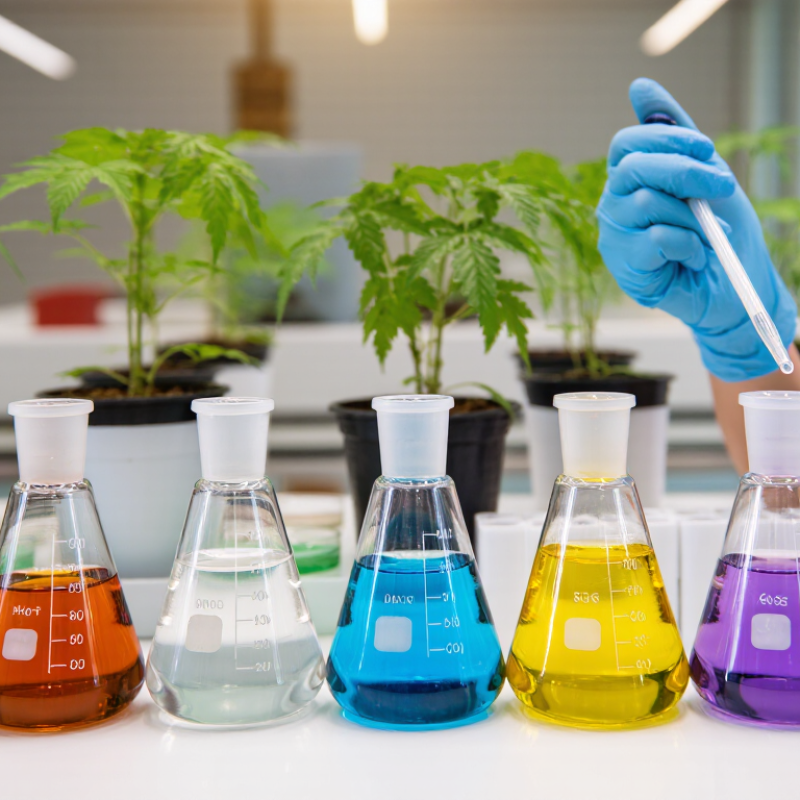
China Top 10 Biostimulant Suppliers?

Biostimulants Explained: The Four Plant Responses Defined by EU Regulation 2019/1009

China Top 10 Biostimulant Suppliers?

EU Regulation 2019/1009 defines a plant biostimulant by what it does, not simply by its ingredients. Its sole purpose must be to stimulate plant nutrition processes independently of the product’s nutrient content. The regulation identifies four possible responses. A product needs to support at least one.

The first is nutrient use efficiency: crops may use available nutrients more effectively.

The second is tolerance to abiotic stress, such as drought, heat, or salinity.

The third is improved quality traits, which could include measurable characteristics of harvested produce.

The fourth is greater availability of nutrients already confined in soil or the rhizosphere.

That distinction matters. A biostimulant is not automatically a fertilizer, and visible growth alone does not prove a particular response.

For buyers comparing suppliers, ask which response the product is designed to support and what trial evidence backs that claim. Look for clear methods, crop details, application rates, and results from conditions resembling your own fields. Soil texture, weather, and timing can change outcomes. Even careful trials have limits; one season rarely tells the whole story.

A practical assessment should connect the claimed plant response to measurable observations, not just a promising label.

Why China Matters: 118.97 Million Hectares Sown to Grain in 2023

China’s 118.97 million hectares sown to grain in 2023 show the scale of its agricultural production. The figure describes planted area, not the acreage treated with biostimulants. Still, it helps explain why suppliers serving Chinese agriculture need to understand varied crops, soils, and growing conditions. A wheat field in the north and a rice paddy in the south do not pose identical challenges.

A vast area.

For buyers comparing China’s top biostimulant suppliers, national scale is only a starting point. Look for crop-specific field data, clear product composition, consistent quality controls, and practical application guidance. Results should be tested under relevant conditions, since performance can shift with weather, soil, and farm practice. A supplier’s claims deserve scrutiny, too. Large grain acreage does not prove that a product works everywhere, or that farmers will adopt it. That distinction is easy to overlook. Reliable decisions need local evidence and transparent methods, not just a striking national statistic.

How to Assess Suppliers: Product Efficacy, Quality Systems, Compliance, and Capacity

China Top 10 Biostimulant Suppliers?

How to Assess Suppliers: Product Efficacy, Quality Systems, Compliance, and Capacity

Comparing biostimulant suppliers takes more than reading product claims. Ask for trial data that names the crop, application rate, timing, and growing conditions. Results from a greenhouse may not transfer neatly to open fields. That gap matters. Request references or local demonstration results where available, and compare treated plots with untreated controls.

Review quality documents for batch traceability, raw-material checks, and clear complaint procedures. Ask how the supplier monitors product consistency and handles changes in formulation. Confirm that labels and technical documents match the intended market’s requirements; requirements can vary by location. Avoid relying on verbal assurances alone. A tidy certificate folder is useful, but it does not prove field performance.

Capacity deserves a practical check. Ask about typical lead times, seasonal inventory, packaging options, and how delays are communicated. If possible, discuss a small initial order before planning a full-season supply. This may feel cautious, perhaps even slow, but shortages during planting are harder to fix.

Tips: Compare suppliers using the same questions. Keep trial notes, including weather and application dates. If data is unclear, ask for clarification before buying.

China’s Top 10 Biostimulant Suppliers: Compare Products, Applications, and Export Reach

A useful comparison of China’s ten biostimulant suppliers starts with product composition, not catalogue claims. Products may include seaweed extracts, amino-acid blends, humic substances, or microbial formulations. Request ingredient specifications, batch analyses, and storage guidance. Small details matter. Documentation helps buyers assess consistency, though a certificate alone cannot predict field performance.

Applications depend on crop, soil, climate, and the grower’s objective. A foliar product used on greenhouse vegetables may not suit a seed-treatment program or fruit orchard. Ask for trial data that identifies the crop, application rate, timing, and measured outcome. Local trials are valuable, but results from one season may not transfer neatly to another. That is an imperfect comparison, and worth admitting.

Export reach is more than a list of destination countries. Review shipping experience, language support, packaging options, and the supplier’s ability to provide clear product documents. Confirm sample availability and response times before discussing large orders. Compare these details alongside formulation range and technical support; the supplier with the broadest catalogue may not be the best fit for a specific crop or market.

China’s Top 10 Biostimulant Suppliers: Compare Products, Applications, and Export Reach

Supplier-neutral view of common crop applications by biostimulant product type. This is not a supplier ranking or market-share chart.

A value of 1 indicates a commonly reported application area; 0 means it is not a defining focus of that product type. Applications can vary by formulation and crop. Supplier export reach is omitted because it requires verifiable company-level data.

Market Context: China’s 2023 Grain Output Reached 695.41 Million Tonnes

China Top 10 Biostimulant Suppliers?

China’s 2023 grain output reached 695.41 million tonnes, up 1.3% year on year, according to the National Bureau of Statistics’ 2023 National Grain Production Report. Sown area was 118.97 million hectares, while average yield reached about 5,841 kilograms per hectare. That is substantial. These figures show the scale of production that agricultural inputs must serve, but they do not prove that any single product improves yields.

For biostimulant suppliers, the market context is practical: growers need reliable performance across varied soils, crops, and weather. The OECD-FAO Agricultural Outlook 2024–2033 examines productivity and resource efficiency as important pressures on food systems. In China, that makes field evidence more useful than broad promises. Trials should record crop, location, application rate, weather, and yield, with untreated plots as a comparison. Small details matter.

The national harvest figure is not a supplier ranking. A careful “top 10” assessment should compare product composition, local trial data, quality controls, and technical support—not just sales claims. Results can vary, and sometimes the difference is modest. That uncertainty deserves a place in any honest market discussion.

China Top 10 Biostimulant Suppliers? — Market Context: China’s 2023 Grain Output Reached 695.41 Million Tonnes

Official agricultural production indicators provide context for the market. This table is not a supplier ranking and contains no company or brand data.

Indicator 2023 figure Unit / description
Total grain output 695.41 Million tonnes
Year-on-year change in grain output +8.88 Million tonnes
Year-on-year growth in grain output 1.3% Annual change
Grain-sown area 118.97 Million hectares
Average grain yield 5,845 Kilograms per hectare
Cereal output 641.43 Million tonnes
Rice output 206.60 Million tonnes
Wheat output 136.59 Million tonnes
Corn output 288.84 Million tonnes
Bean output 23.28 Million tonnes

Source: National Bureau of Statistics of China, Statistical Communiqué of the People’s Republic of China on the 2023 National Economic and Social Development.