Why Are Specialized Chemicals Essential for Modern Industry?
In the landscape of modern industry, specialized chemicals play a pivotal role. They are not merely additives; they are essential building blocks. These chemicals serve various functions, ranging from improving product performance to enhancing durability. Industries such as pharmaceuticals, agriculture, and electronics rely heavily on these specialized chemicals.
Take the pharmaceutical sector, for instance. Specialized chemicals are crucial in drug formulation and delivery. They ensure that medications are effective and safe. In agriculture, these chemicals boost crop yield and protect plants from pests. Yet, despite their importance, the production and usage of specialized chemicals come with challenges.
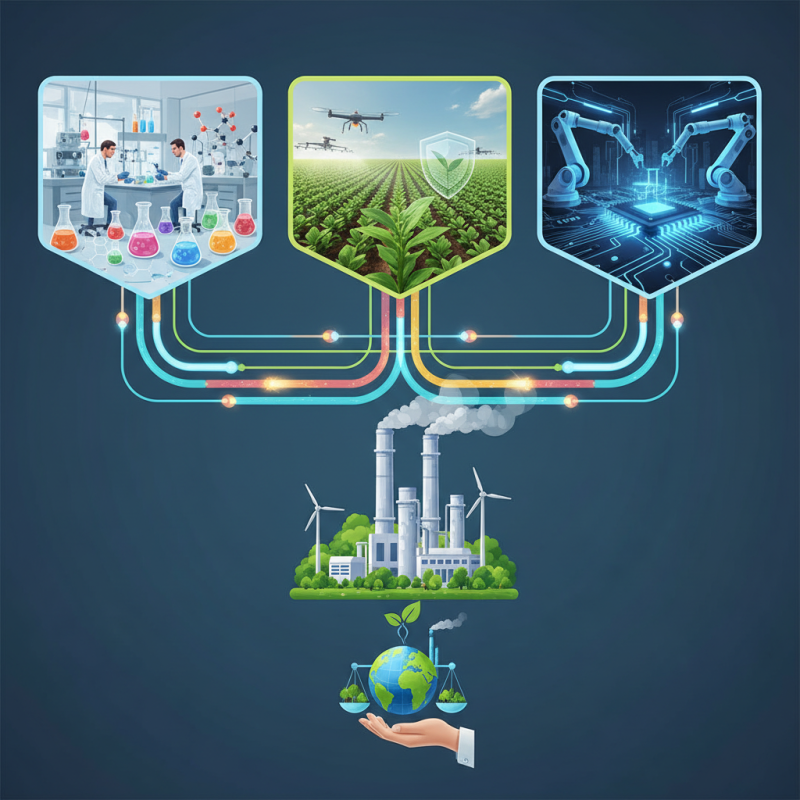
There is a growing need for sustainable practices in their manufacture. Some processes can be environmentally damaging and unsustainable. This raises questions about our responsibility in utilizing these specialized chemicals. Balancing industry needs with environmental concerns is complex. Every choice made in production must consider long-term impacts.
The Role of Specialized Chemicals in Driving Industrial Innovation
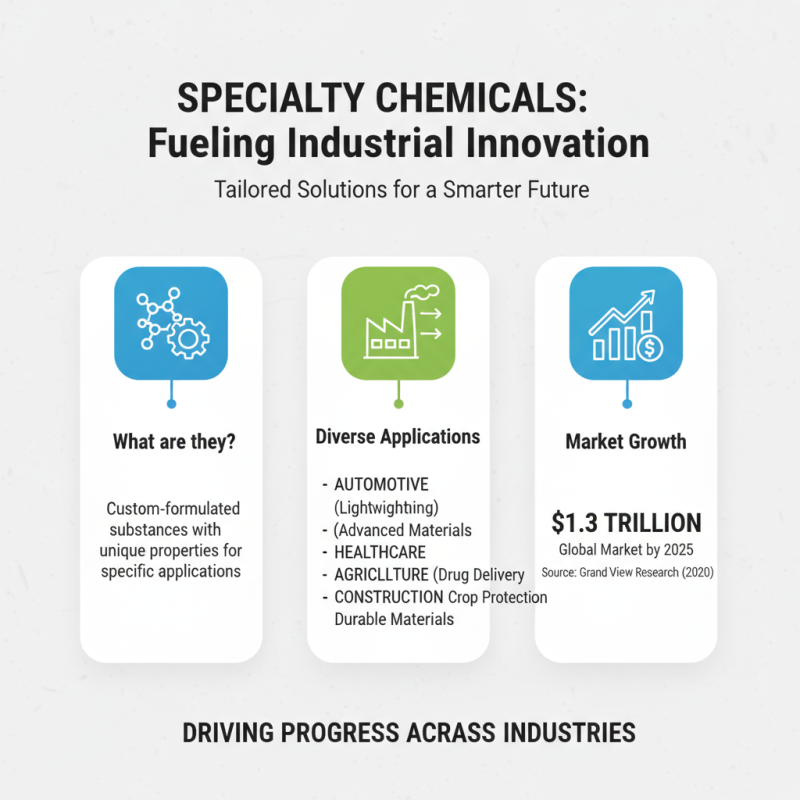
Specialized chemicals play a crucial role in modern industrial innovation. These chemicals are tailored to meet specific needs across various sectors. For instance, a 2020 report by Grand View Research projected that the global specialty chemicals market would reach $1.3 trillion by 2025. This growth indicates a strong demand for innovative materials.
In industries like pharmaceuticals, specialized chemicals enable the development of advanced drugs. They improve efficacy and reduce side effects. However, the reliance on these chemicals can lead to environmental concerns. A study published in Environmental Science & Technology highlighted that some manufacturing processes release harmful byproducts, necessitating reflection on sustainable practices. Moreover, industries face challenges in balancing innovation with safety.
In the automotive sector, specialized chemicals enhance vehicle performance. Lightweight materials are often used to improve fuel efficiency. Yet, the production processes can be energy-intensive. As industries push for modernization, the focus must shift to greener alternatives. Compliance with environmental regulations also remains a significant hurdle for many companies. Embracing innovation is essential, but it must be paired with responsible practices.
Key Applications of Specialized Chemicals Across Various Industries
Specialized chemicals play vital roles in many industries. In agriculture, they enhance crop yields and protect against pests. They are meticulously designed to target specific issues, ensuring minimal impact on the environment. Farmers rely on these chemicals for effective results. However, the misuse or overuse can lead to serious ecological consequences.
In the automotive sector, specialized chemicals are used in manufacturing parts and coatings. They improve durability and performance of vehicles. Advanced formulations help with fuel efficiency and reduce emissions. Yet, the ongoing challenge is balancing innovation with environmental safety. Finding sustainable solutions remains a priority for many manufacturers.
In the pharmaceuticals industry, specialized chemicals are essential in drug formulation. They aid in creating effective medications safe for patients. Each compound must be precisely engineered to achieve desired effects. This complexity sometimes leads to unforeseen challenges in production and development. Continuous research is necessary to optimize these processes.
Economic Impact of Specialized Chemicals on Manufacturing Efficiency
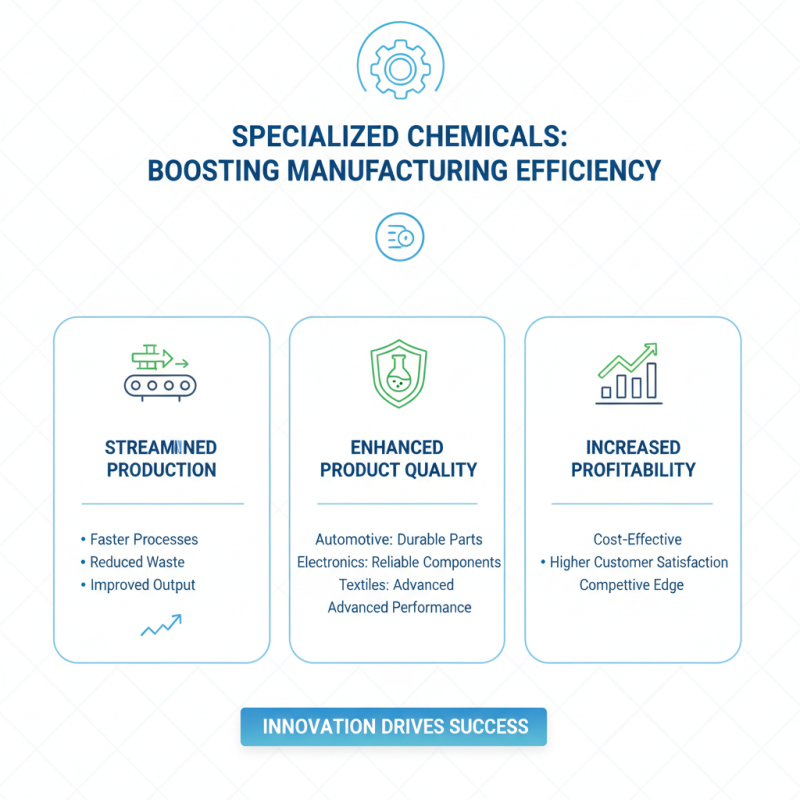
Specialized chemicals play a crucial role in modern manufacturing efficiency. They help streamline production processes across various industries. For instance, in the automotive sector, these chemicals enhance the durability of parts. This directly impacts vehicle longevity and customer satisfaction. Manufacturers can deliver high-quality products faster, boosting productivity.
Moreover, the economic impact is significant. Reduced wastage leads to cost savings. Chemicals designed for specific applications can minimize errors in production. This results in fewer defects and recalls, which are costly for companies. However, the reliance on specialized chemicals brings challenges. Not all chemicals are environmentally friendly. Manufacturers must consider sustainability alongside efficiency.
Regulation is another concern. Complex regulations can slow down innovation. Some companies may struggle to keep up. This can hinder their competitiveness. There’s a delicate balance between leveraging specialized chemicals and addressing environmental impacts. Manufacturers should reflect on their usage and invest in safer alternatives. This could enhance their reputation and lead to long-term benefits.
Environmental Considerations in the Use of Specialized Chemicals
Specialized chemicals play a pivotal role in various industries. However, their environmental impact warrants careful consideration. The production of these chemicals often leads to significant emissions. For instance, a 2022 report indicated that chemical manufacturing accounts for nearly 25% of global greenhouse gas emissions. This statistic emphasizes the need for sustainable practices within the industry.
Innovating towards greener alternatives is crucial. Many companies are investing in bio-based chemicals, which can reduce reliance on fossil fuels. A survey by the Global Chemical Industry Council in 2023 found that 45% of chemical firms are now prioritizing eco-friendly production methods. Yet, while these efforts are promising, not all methods are equally effective or accessible. Transitioning to sustainable practices can be costly and complex. For example, raw material sourcing remains a challenge. Some eco-friendly chemicals require rare bio-resources that may not be widely available.
Addressing the lifecycle of specialized chemicals is also vital. From production to disposal, each step poses risks. Reports highlight that improper disposal can lead to soil and water contamination. Experts urge stricter regulations and better management practices to mitigate these risks. An increase in public awareness is shaping industry standards, but more action is needed. Sustainability and innovation must work hand in hand to ensure a balanced approach in utilizing specialized chemicals.
Why Are Specialized Chemicals Essential for Modern Industry? - Environmental Considerations in the Use of Specialized Chemicals
| Chemical Type |
Application Area |
Environmental Impact |
Regulatory Considerations |
| Solvents |
Paints and Coatings |
Volatile Organic Compounds (VOCs) |
Regulations on VOC emissions |
| Catalysts |
Chemical Production |
Reduces energy consumption |
Compliance with waste disposal regulations |
| Surfactants |
Detergents and Cleaners |
Eutrophication potential |
Biodegradability standards |
| Specialty Polymers |
Electronics and Aerospace |
Low environmental footprint |
Material safety data sheet compliance |
| Adhesives |
Construction and Manufacturing |
Toxicity concerns |
Adherence to safety regulations |
Future Trends: Advancements in Specialized Chemical Technologies
The landscape of specialized chemicals is rapidly evolving. Recent reports indicate that the global specialty chemicals market could reach $1 trillion by 2024. This growth is fueled by increasing demand from sectors like pharmaceuticals and agriculture. Innovations in chemical formulation lead to enhanced performance and sustainability. Smart materials are a key trend. These materials change properties in response to environmental stimuli.
Bio-based chemicals are gaining traction. They promise reduced carbon footprints and promote circular economy practices. It’s important to note, however, that scalability remains a challenge. Transitioning from conventional to bio-based methods demands significant investment. Industries must balance cost with environmental impact.
Automation and AI are transforming specialized chemical production. They enable real-time monitoring and optimization of chemical processes. Yet, implementing these technologies is not without hurdles. Companies must navigate cybersecurity risks and employee training. The road ahead is promising but requires careful consideration of these emerging complexities.
Trends in Specialized Chemicals for Modern Industry