Understanding Phosgene Chemical and Its Industrial Applications?
Phosgene chemical is a vital compound in modern industrial applications. It is primarily used in the production of isocyanates and polycarbonate plastics. According to a recent market report, the global demand for phosgene-based products is expected to grow at a CAGR of 4.5% over the next five years.
The versatility of phosgene chemical stems from its role in synthesizing various pharmaceuticals and agrochemicals. In the pharmaceutical industry, it serves as an intermediate for several critical drugs. However, the handling of phosgene requires stringent safety measures due to its toxicity. Many companies have faced challenges in maintaining these safety standards.
Despite its importance, the environmental impact of phosgene production cannot be overlooked. It poses risks if not managed correctly. Continuous improvement in safety processes is necessary. Balancing industrial efficiency with environmental sustainability remains a field for reflection and action.

Overview of Phosgene: Definition and Chemical Properties
Phosgene is a highly reactive chemical compound. It has the chemical formula COCl₂. This compound appears as a colorless gas with a distinct odor resembling freshly cut hay. Phosgene is important in the production of various chemicals. However, its toxicity requires careful handling.
In terms of chemical properties, phosgene is a carbonyl chloride. Its boiling point is around 8.3°C, making it slightly volatile. It can easily convert into a gas under room temperature. Phosgene reacts with water, producing hydrochloric acid and carbon dioxide. This reaction highlights the need for stringent safety measures.
Industrially, phosgene is used to manufacture isocyanates and polycarbonate plastics. Due to its reactivity, it serves as an intermediate in many chemical processes. Yet, the risks associated with it are significant. Mishandling can lead to hazardous exposures. Awareness of these dangers is essential for safety in the industrial sector.
Understanding Phosgene Chemical and Its Industrial Applications
| Property |
Description |
| Chemical Formula |
COCl2 |
| Molecular Weight |
98.92 g/mol |
| Appearance |
Colorless gas or liquid |
| Boiling Point |
8.3 °C |
| Melting Point |
-20.2 °C |
| Density |
1.2 g/cm3 (liquid) |
| Industrial Uses |
Used in the production of isocyanates, polycarbonate, and insecticides |
| Safety Notes |
Highly toxic and corrosive, requires careful handling |
Historical Context: Discovery and Development of Phosgene Usage
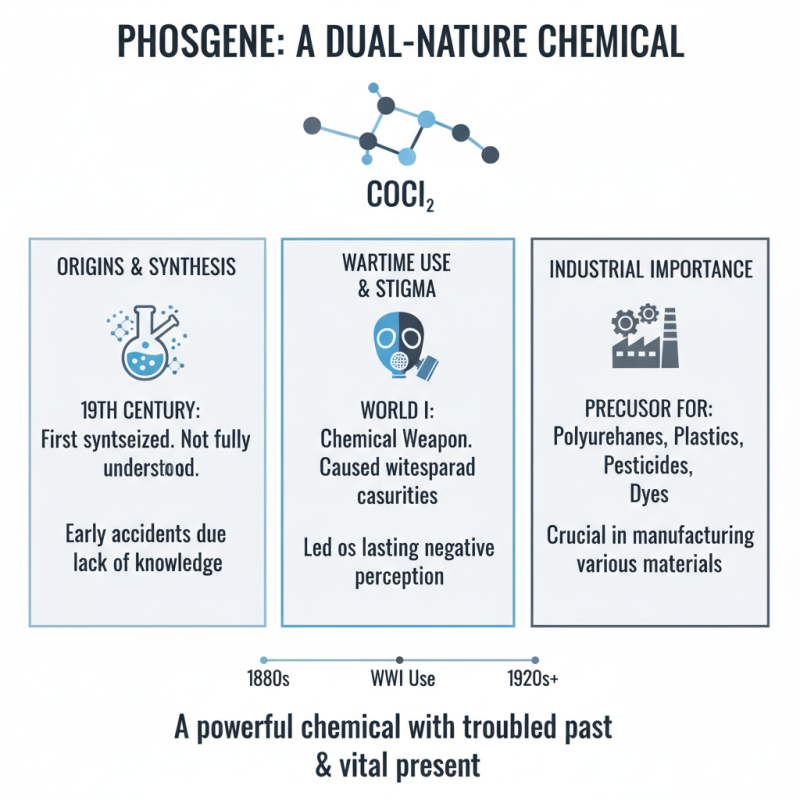
Phosgene is a chemical that played a significant role in industrial development. Its history dates back to the 19th century when it was first synthesized. Initially, it was not adequately understood, leading to multiple accidents. The early perception of phosgene was largely tied to its poisonous nature. In fact, phosgene was used in warfare during World War I. This created a lasting stigma around its application.
Despite its dangers, phosgene found its place in the industrial sector. It became essential in the production of isocyanates and polycarbonate plastics. The realization of its potential marked a turning point. With advancements in technology, safer methods of handling phosgene emerged. Industry began to embrace its utility while ensuring safety protocols.
**Tip:** Always prioritize safety when dealing with chemicals. Knowledge is key. Understand the properties and risks.
The debate around phosgene continues. While it is invaluable in many processes, the need for caution remains. Companies must regularly evaluate their safety measures. Some still struggle with the balance between innovation and safety. Continuous learning is essential.
**Tip:** Keep updated with training sessions. Learn from past mistakes to improve future practices.
Industrial Production: Methods for Synthesizing Phosgene Efficiently
Phosgene is a crucial chemical in various industries. It primarily serves as an intermediate in the synthesis of pharmaceuticals and agrochemicals. The industrial production of phosgene involves several methods. Each method has its advantages and challenges.
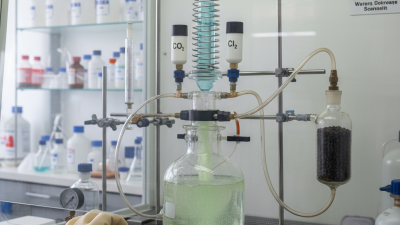
One common method is the reaction of carbon monoxide with chlorine. This process is efficient, yet it requires strict safety measures. Chlorination of diphosgene is another approach. This process can yield high purity levels but poses significant handling risks. Additionally, catalytic processes are being explored. These could potentially lower costs and improve safety profiles, but they are still in development.
Challenges exist in optimizing these methods. Safety remains a top priority. Inadequate control measures can lead to severe consequences. Environmental considerations also play a role. Emissions must be minimized. Improved methods are necessary, yet the road ahead is complex. Each technology must be evaluated carefully.
Phosgene Production Methods and Their Efficiency
Applications in Industry: Role of Phosgene in Chemical Manufacturing
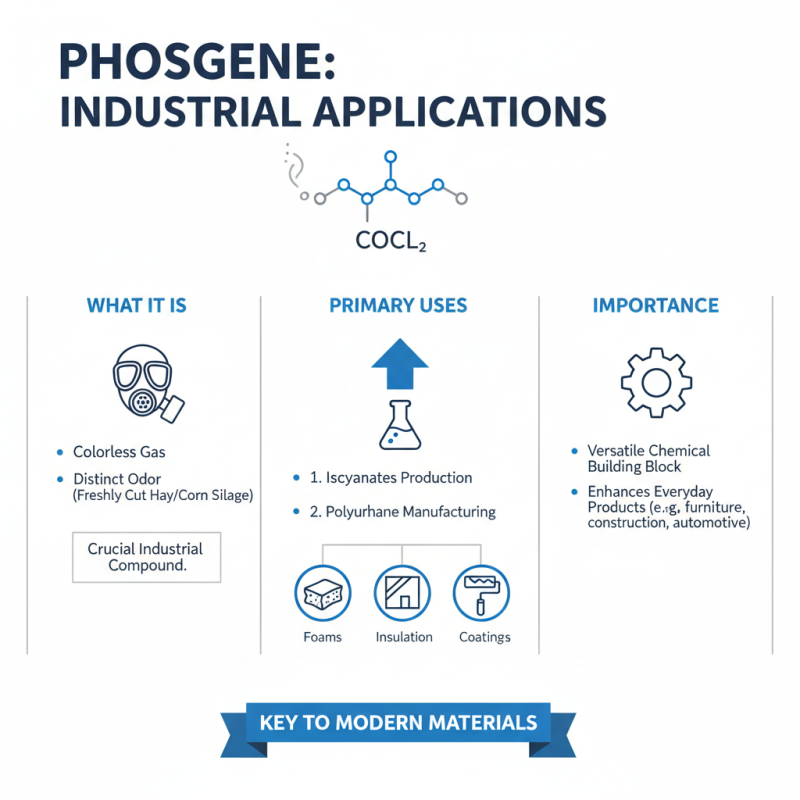
Phosgene, a colorless gas with a distinct odor, plays a crucial role in various industrial applications. It is primarily used in the production of isocyanates, essential for manufacturing polyurethane. Polyurethane is widely used in foam production, insulation, and coatings. Its versatility makes phosgene an important compound in the chemical industry, particularly in creating materials that enhance everyday products.
However, the use of phosgene is not without risks. This compound has significant toxicity, which raises safety concerns in production facilities. Workers must wear protective gear and follow stringent safety protocols. Despite these challenges, phosgene remains a key player in producing high-performance chemicals. Its effectiveness often outweighs the safety risks when managed correctly. The balance between utility and safety is delicate and requires constant vigilance.
Phosgene also contributes to insecticides and pharmaceuticals. In these sectors, the precision in using phosgene is vital. Variations in procedures can lead to dangerous outcomes. Chemical manufacturers continuously refine their methods. They aim to minimize the hazards associated with phosgene while maximizing its benefits. This ongoing quest for improvement highlights the complex nature of chemical manufacturing.
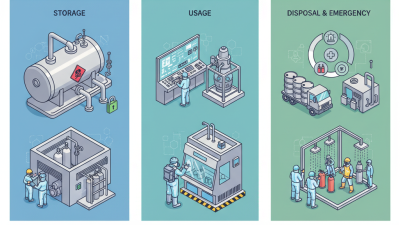
Safety Protocols: Handling and Risks Associated with Phosgene Use
Working with phosgene demands stringent safety protocols. It is a highly toxic chemical, which poses serious health risks. Exposure may occur through inhalation. Even small amounts can lead to severe respiratory effects. Proper ventilation is non-negotiable in environments where phosgene is present. Protective gear, including masks and gloves, should always be worn.
In industrial settings, risks must be assessed continuously. Procedures for leak detection should be in place. Regular training for employees is crucial. They should know emergency responses and first-aid measures. Spills require immediate attention. Dilution with water is ineffective; containment measures are essential. Organizations often fail to prepare adequately for accidents. That can lead to tragic consequences.
Communication about phosgene’s dangers is vital. Workers must be informed regularly and clearly. Safety audits should be routine. Companies should learn from past mistakes. Over time, improving safety culture can help minimize risks associated with phosgene. Remember, safety is not just about compliance; it is about protecting lives.