Choosing among the top Petroleum Refining Catalysts suppliers worldwide requires more than comparing product brochures. Refinery operators examine catalyst activity, selectivity, regeneration behavior, and resistance to contaminants. They also study performance across FCC, hydrotreating, hydrocracking, reforming, and sulfur recovery units. Small differences can affect throughput, fuel quality, energy consumption, and maintenance schedules.
This guide reviews leading suppliers through practical and technical criteria. It considers laboratory evidence, commercial refinery experience, technical service, supply stability, and compliance documentation. Reliable suppliers usually provide test methods, operating ranges, safety data, and clear replacement procedures. Field support matters, especially when catalyst performance changes after feedstock variation. A drum arriving late can disrupt an entire production plan.
No supplier fits every refinery.
Crude quality, unit design, regional logistics, and operating targets influence the decision. Some companies demonstrate strong research capabilities, while others offer better local service or specialized formulations. Public information can also be incomplete. Marketing claims do not always replace long-term operating data. That limitation deserves attention.
The discussion therefore avoids a simple popularity ranking. It focuses on evidence that procurement teams, process engineers, and plant managers can verify. Relevant certifications, transparent technical communication, and documented environmental practices strengthen supplier credibility. However, supplier comparisons remain partly subjective without consistent, independent testing. Readers should confirm current specifications, warranties, delivery capabilities, and regulatory requirements before making a purchase decision. The most suitable partner is not necessarily the largest name. It is the supplier that can deliver dependable catalyst performance under real refinery conditions.
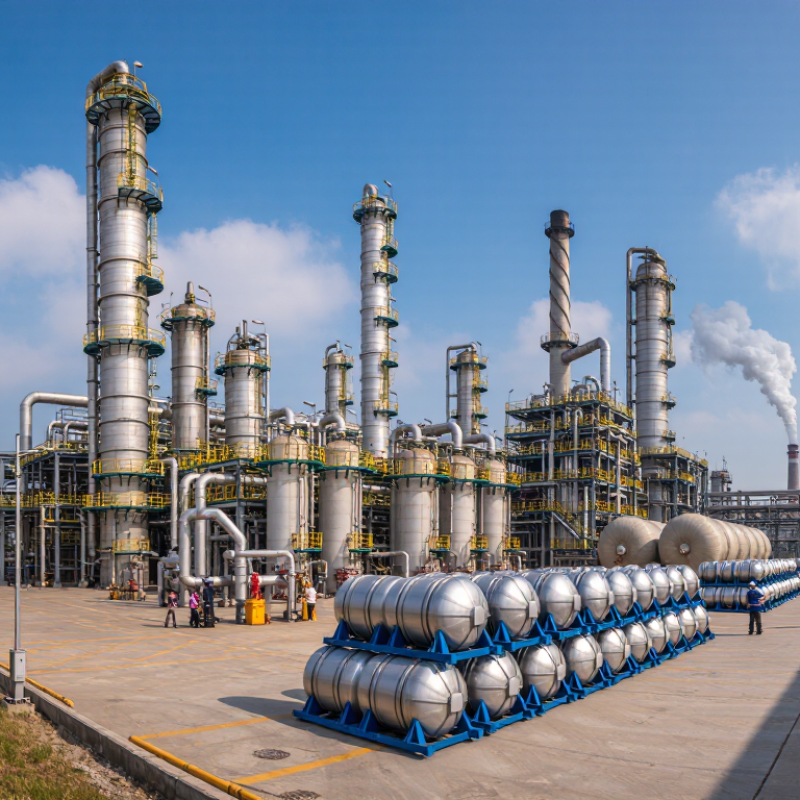
Petroleum refining catalysts are engineered solids that speed up chemical reactions without being consumed in normal operation. They help convert heavy fractions into gasoline, diesel, jet fuel, and petrochemical feedstocks. Common units include fluid catalytic cracking, hydrocracking, catalytic reforming, and hydrotreating. Each uses different pore structures, active metals, and operating temperatures.
Their value is practical. Hydrotreating catalysts remove sulfur before fuels reach storage tanks or engines. The International Energy Agency’s Oil 2024 report projects global oil demand growth will slow to about 1 million barrels per day in 2024. This raises pressure on refineries to produce more value from existing equipment. Better catalyst activity can reduce hydrogen use, energy consumption, and unplanned shutdowns. Small gains matter.
The International Maritime Organization reduced the global marine fuel sulfur limit from 3.5% to 0.5% in 2020. That change increased the importance of reliable desulfurization performance. When comparing worldwide catalyst suppliers, refinery teams should examine laboratory data, pilot-scale results, regeneration behavior, and technical support. Feedstock changes can quickly weaken attractive results. The picture is not perfectly clean. A catalyst with high initial activity may age faster, while a cheaper option may create more pressure drop. Experienced operators therefore track sulfur removal, conversion, coke formation, and cycle length under real feed conditions. Generic claims deserve skepticism.
Top Petroleum Refining Catalysts Suppliers Worldwide?
How to Evaluate Global Petroleum Refining Catalyst Suppliers
Choosing a petroleum refining catalyst supplier requires more than comparing prices. Start with process fit. Ask whether the catalyst suits your feedstock, reactor design, operating temperature, and target products. A catalyst that performs well in one refinery may disappoint in another. Numbers need context.
Request technical data from commercial units, not only laboratory tests. Review conversion, selectivity, pressure drop, regeneration behavior, and expected cycle length. Ask for recent performance records from comparable refineries. Independent test results can strengthen supplier claims. Still, no forecast is perfect. Feed quality, operator practices, and equipment condition can change outcomes.
Evaluate technical support before signing a contract. Experienced specialists should help with loading procedures, start-up monitoring, sampling, and performance reviews. Check how the supplier manages batch consistency, traceability, transport, and emergency replacement needs. Safety documentation and environmental compliance should be current and easy to verify. Visit a production site when possible, and examine quality controls rather than accepting polished presentations. Ask for evidence. A low purchase price may hide higher replacement frequency, disposal costs, or lost production. Calculate total lifecycle value using realistic operating data, including downtime and catalyst handling. Supplier references matter, but direct conversations reveal more than formal case studies.
Regional refining capacity is a useful market-size indicator when evaluating petroleum refining catalyst suppliers. Larger refining bases generally imply higher potential demand for hydroprocessing, fluid catalytic cracking, reforming, and other refinery catalysts. Values are rounded 2023 estimates in million barrels per day, based on the Energy Institute Statistical Review of World Energy 2024.
The worldwide refining industry is supplied by several distinct catalyst categories. Fluid catalytic cracking catalysts support gasoline production and help convert heavier feedstocks into lighter products. Hydroprocessing catalysts remove sulfur, nitrogen, and metals from refinery streams. They are increasingly important as fuel specifications become stricter.
Refinery operators also purchase reforming, isomerization, and alkylation catalysts. These products improve octane quality and support cleaner gasoline blending. Specialty catalysts serve residue upgrading, hydrogen production, and emissions-control systems. Supplier structures vary across regions. Large integrated manufacturers usually provide technical service, catalyst regeneration, and performance monitoring. Independent producers often focus on niche formulations or flexible delivery. Regional distributors may offer faster logistics, especially near smaller refineries.
Scale explains the competition. OPEC’s Annual Statistical Bulletin 2024 reported global refining capacity of approximately 103 million barrels per day at the end of 2023. The International Energy Agency’s Oil 2024 analysis also identifies continuing changes in refinery runs, product demand, and conversion capacity. These shifts favor suppliers that can adapt catalysts to heavier crude, lower-sulfur fuels, and changing operating temperatures.
The category map is not perfectly clean. Some suppliers combine manufacturing, licensing, and laboratory services. Public reports also group catalyst products differently, which complicates market comparisons. In practice, refinery experience still matters. A catalyst that performs well in one unit may disappoint elsewhere because feed quality, reactor design, and regeneration cycles differ. Small performance gains can become significant across a 200,000-barrel-per-day refinery.
Top Petroleum Refining Catalysts Suppliers Worldwide?
Leading petroleum refining catalyst suppliers typically offer complete product portfolios rather than one universal solution. Their key products include fluid catalytic cracking catalysts, hydroprocessing catalysts, reforming catalysts, and sulfur recovery catalysts. These materials help convert heavy feedstocks into gasoline, diesel, jet fuel, and petrochemical intermediates. Modern catalyst technologies also target lower sulfur levels, improved octane, better hydrogen efficiency, and reduced coke formation.
In refinery evaluations, catalyst selection should match feed quality, unit design, operating temperature, and regeneration limits. Zeolite-based cracking catalysts can improve conversion, while metal-supported hydroprocessing catalysts remove sulfur and nitrogen compounds. Advanced pore structures may improve access to larger hydrocarbon molecules. Digital monitoring tools can track activity loss and predict replacement timing. However, no catalyst performs perfectly. A product that works well in one unit may underperform elsewhere. Feed variability is often underestimated.
Tips: Request pilot-test data, not only performance claims. Compare activity, selectivity, mechanical strength, and expected cycle length. Check technical support, spent-catalyst handling, and supply continuity. Ask how the supplier validates results under realistic operating conditions. Small details matter. A minor change in feed contaminants can alter pressure drop, coke yield, and product quality. Reviewers should also question overly precise savings estimates, because refinery performance depends on many interacting variables.
Representative catalyst product families and technologies commonly supplied to petroleum refineries worldwide. Supplier names and commercial brands are intentionally omitted.
| Refining Unit | Catalyst Product Family | Typical Active Chemistry | Primary Function | Typical Feed or Operating Challenge | Key Performance Attributes | Common Technology Features Offered by Suppliers |
|---|---|---|---|---|---|---|
| Fluid Catalytic Cracking (FCC) | Fluidized zeolite cracking catalyst | USY or REUSY zeolite dispersed in a silica–alumina matrix | Converts heavy gas oils into gasoline, liquefied petroleum gas, light olefins and other valuable products. | Vacuum gas oil, atmospheric residue blends, metals, nitrogen and elevated carbon residue. | High activityGood fluidizationAttrition resistanceSelective cracking | Matrix engineering, zeolite stabilization, bottoms-cracking formulations, metals-tolerant systems and additive packages for gasoline, propylene or dry-gas optimization. |
| FCC Additives | Propylene-selective additive | ZSM-5-type zeolite in a catalytic matrix | Increases light olefin production, particularly propylene, by selectively cracking gasoline-range molecules. | Refineries seeking higher propylene yield from FCC units or improved flexibility between gasoline and petrochemical products. | Olefin selectivityHydrothermal stabilityControlled activity | Standalone or co-injected additive systems, dosage optimization and compatibility with the base FCC catalyst inventory. |
| FCC Additives | SOx-reduction additive | Metal oxide-based oxygen-transfer chemistry, commonly containing cerium or related promoters | Transfers sulfur oxides from FCC regenerator flue gas back into the cracking cycle for removal in the reactor section. | High-sulfur feeds and environmental limits on sulfur oxide emissions. | SOx captureRegenerator compatibilityLow impact on cracking | Regenerator-focused formulation, sulfur-transfer optimization and integration with refinery emissions-control systems. |
| Hydrotreating | Distillate hydrodesulfurization catalyst | Cobalt–molybdenum or nickel–molybdenum sulfide phases on alumina | Removes sulfur, nitrogen and selected contaminants while hydrogenating olefins and improving product stability. | Naphtha, kerosene, diesel and other middle-distillate streams containing sulfur and nitrogen compounds. | High HDS activityLong cycle lifeLow pressure dropRegenerability | Pore-size tailoring, high-dispersion active metals, grading systems and catalyst loading designs for pressure-drop and heat-management control. |
| Residue Hydrotreating | High-metals residue hydrotreating catalyst | Nickel–molybdenum or cobalt–molybdenum sulfides on macroporous alumina or mixed-oxide supports | Reduces sulfur, nitrogen, metals and Conradson carbon while protecting downstream units. | Atmospheric residue, vacuum residue and heavy feeds containing nickel, vanadium, asphaltenes and high microcarbon residue. | Large pore volumeMetals uptakeGuard-bed protectionResistance to deactivation | Multi-bed grading, demetallization guard catalysts, pore architecture control and staged replacement strategies. |
| Hydrocracking | Dual-function hydrocracking catalyst | Nickel–tungsten or nickel–molybdenum hydrogenation metals combined with acidic zeolite or amorphous silica–alumina | Converts heavy feedstocks into high-quality diesel, kerosene, naphtha and lubricant-range products. | Vacuum gas oil and heavy distillates requiring deep conversion, sulfur removal and improved product quality. | High conversionHydrogenation activityProduct selectivityNitrogen tolerance | Single-stage and two-stage catalyst systems, acidity adjustment, conversion-selective formulations and catalyst grading for temperature control. |
| Naphtha Reforming | Reforming catalyst | Platinum with rhenium or other promoters on chlorided alumina | Raises octane by converting paraffins and naphthenes into aromatics and hydrogen. | Low-octane naphtha streams; feed contaminants such as sulfur, nitrogen and water must be tightly controlled. | High octane yieldHydrogen productionCoking resistanceStable dispersion | Continuous, semi-regenerative and cyclic reforming catalyst systems; optimized metal dispersion, chloride management and regeneration protocols. |
| Isomerization | Light naphtha isomerization catalyst | Chlorinated alumina with platinum, or sulfated zirconia-based systems | Converts normal paraffins into branched isomers to increase gasoline octane without forming significant aromatics. | C5/C6 light naphtha with strict requirements for sulfur, water and oxygenate removal. | High isomerate octaneLow benzene formationMild operating conditions | Feed-purification guidance, chloride-management systems, hydrogen-assisted operation and catalyst options for different refinery configurations. |
| Alkylation | Acid alkylation catalyst system | Hydrofluoric acid or sulfuric acid, depending on the process design | Combines isobutane with light olefins to produce high-octane, low-sulfur alkylate blending component. | Refinery C3/C4 olefin streams and isobutane; requires careful acid, water and contaminant management. | High octane alkylateLow vapor pressureLow sulfur | Acid-strength management, corrosion-control practices, contaminant removal and process-safety systems associated with acid handling. |
| Hydrogen Production | Steam methane reforming catalyst | Nickel supported on calcium-aluminate or related refractory materials | Converts natural gas or light hydrocarbons with steam into synthesis gas for hydrogen production. | Hydrogen demand from hydrotreating and hydrocracking units; feed sulfur must be removed upstream. | High reforming activityThermal stabilityCoking resistanceMechanical strength | Top-fired and side-fired reformer compatibility, shaped catalyst geometries, low pressure-drop designs and catalyst loading recommendations. |
| Hydrogen Purification | Water-gas shift catalyst | Iron–chromium oxide for high-temperature shift; copper–zinc oxide–alumina for low-temperature shift | Converts carbon monoxide and steam into additional hydrogen and carbon dioxide. | Synthesis gas from steam reforming or partial oxidation, with operating conditions selected by shift stage. | CO conversionThermal stabilitySulfur sensitivity control | High- and low-temperature shift configurations, guard-bed recommendations and optimized catalyst loading for heat and mass transfer. |
| Sulfur Recovery | Claus sulfur-recovery catalyst | Activated alumina or titanium dioxide-based catalyst | Converts hydrogen sulfide and sulfur-containing compounds into elemental sulfur. | Acid gas from amine treating and sour-water stripping units. | High sulfur conversionHydrolysis activityWater toleranceLong service life | Hydrolysis catalysts, titanium-enhanced formulations, guard catalysts for contaminants and staged Claus reactor catalyst systems. |
| Tail-Gas Treatment | Selective oxidation or tail-gas hydrogenation catalyst | Alumina-supported cobalt–molybdenum, nickel–molybdenum or oxidation-promoted metal systems | Improves sulfur recovery by converting residual sulfur compounds before final incineration or further treatment. | Claus tail gas containing hydrogen sulfide, sulfur vapor, sulfur dioxide and carbonyl sulfide. | Deep sulfur conversionLow-temperature activityPoison resistance | Tail-gas hydrogenation, selective oxidation, carbonyl sulfide hydrolysis and integrated sulfur-emissions reduction solutions. |
Top Petroleum Refining Catalysts Suppliers Worldwide?
Regional Market Factors Shaping Petroleum Refining Catalyst Supply
Petroleum refining catalyst supply is shaped by local refinery designs, crude quality, and environmental rules. Heavy crude requires stronger cracking and residue-conversion performance. Light crude may need different catalyst balances. These technical differences influence supplier inventories and delivery schedules. A supplier experienced in one region may not fit another. That is often overlooked.
North American refineries increasingly value catalysts that support cleaner fuels and flexible feedstocks. European buyers face strict emissions targets and stronger pressure to improve energy efficiency. In the Middle East, expanding refining capacity supports demand for high-volume catalyst shipments and technical services. Asian markets vary widely. Some refineries prioritize rapid capacity growth, while mature facilities focus on yield improvement and waste reduction. Transport distance, port access, storage conditions, and import procedures also affect final cost. A low quoted price can become expensive after delays.
Tips: Compare suppliers by regional experience, laboratory support, and replacement speed. Ask for performance data using crude similar to yours. Check how catalysts are stored during humid or hot transport. Review technical service coverage before signing contracts. Do not rely only on published efficiency claims. Field results can differ. A small trial may reveal problems earlier. Buyers should also reassess catalyst demand when crude sources, fuel standards, or operating temperatures change. Local partnerships can help, but they are not automatically reliable. Verify records, testing methods, and communication practices carefully.
Contact our team with questions, product inquiries or challenge us to engineer a solution for you.
Tel: +1 716 433 6764
Fax: +1 716 433 2850
Email: sale@ashymed.com
VanDeMark Chemical Inc.
One North Transit Road
Lockport, NY 14094 USA