How to Choose the Best Home EV Charger for Your Needs?
When considering the purchase of a Home Ev Charger, the options can be overwhelming. According to Jack McCarthy, a leading expert in electric vehicle infrastructure, “Choosing the right charger is crucial for maximizing convenience and efficiency.” This statement underscores the importance of selecting a charger tailored to your specific needs.
The right Home EV Charger not only complements your home’s electrical system but also enhances your daily routine. A good charger can reduce charging time, making it easier to recharge your electric vehicle during off-peak hours. However, many homeowners overlook crucial factors like installation requirements and compatibility with their EVs.
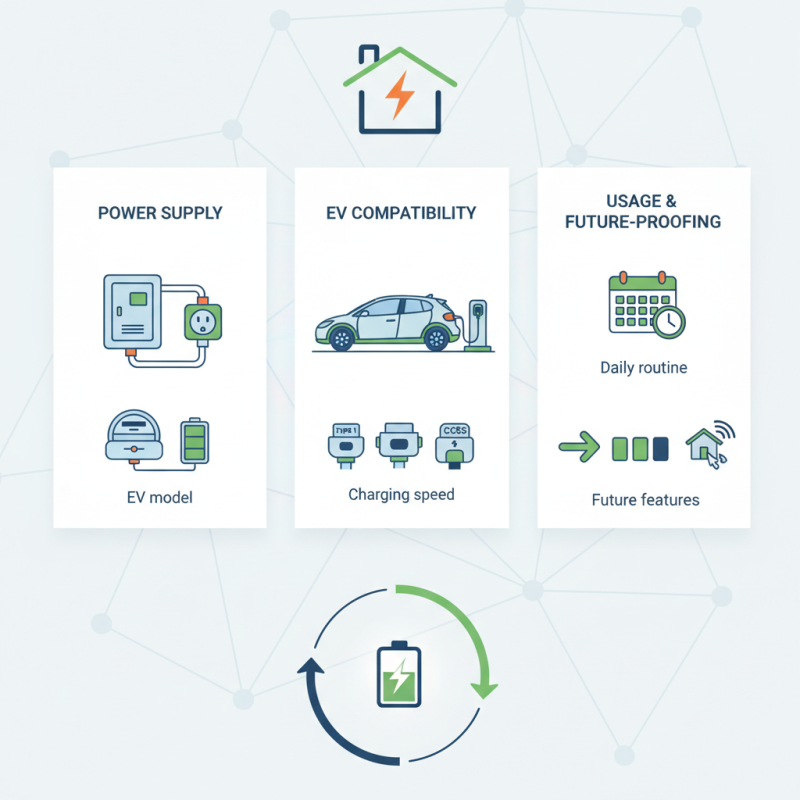
As we delve deeper into the world of Home EV Chargers, it is important to reflect on your own lifestyle and driving habits. Not every charger will meet everyone’s needs. Evaluating your power supply, usage frequency, and future-proofing options are vital steps. Ultimately, a well-informed choice can lead to a more seamless and efficient charging experience.
Understanding the Different Types of Home EV Chargers Available
When considering a home EV charger, understanding the options is crucial. There are three primary types of chargers: Level 1, Level 2, and DC fast chargers. Level 1 chargers use a standard 120-volt outlet, making them ideal for overnight charging. However, they are slower, taking up to 24 hours to fully charge some models. This option suits households with daily commuting needs and low-distance driving.
Level 2 chargers operate on a 240-volt outlet, significantly reducing charging time. They typically charge an electric vehicle in 4 to 8 hours. This option is better for frequent drivers or those with larger batteries. They require professional installation, which can add to the upfront cost. A downside may be the installation process, which can create delays and requires proper electrical work.
DC fast chargers are the most efficient but are generally unsuitable for residential use. They can charge an EV in 30 minutes or less, but they are expensive and require substantial electrical infrastructure. These chargers may reflect a future option for commercial sites rather than home installations. Evaluating your driving habits, home electrical system, and budget will guide you in selecting the appropriate charger for your lifestyle.
How to Choose the Best Home EV Charger for Your Needs?
| Type of Charger | Power Output (kW) | Charging Speed | Installation Type | Cost Estimate ($) |
| Level 1 Charger | 1.4 - 1.9 kW | 4 - 8 mph | Standard outlet | $300 - $600 |
| Level 2 Charger | 3.3 - 19.2 kW | 10 - 60 mph | 240V outlet | $500 - $2,500 |
| DC Fast Charger | 50 - 350 kW | 100 - 300 mph | Commercial use | $10,000 - $50,000 |
| Smart Charger | 3.3 - 22 kW | 10 - 60 mph | Wall-mounted | $600 - $1,500 |
Assessing Your Vehicle's Charging Compatibility and Requirements
When choosing an EV charger, start by assessing your vehicle’s charging compatibility. Different electric vehicles (EVs) have varying charging capabilities, which influence the charger you need. For example, some models support Level 1 charging, which uses standard household outlets, while others require Level 2 chargers for faster, more efficient charging. According to the Electric Vehicle Industry Association, about 80% of EV owners utilize Level 2 charging systems at home, highlighting the importance of compatibility in your decision.
Consider your vehicle's battery capacity and charging time. A charger that produces 7.2 kW can recharge a vehicle with a 60 kWh battery in about eight hours. This calculation is crucial for daily drivers who depend on quick turnaround times. However, some users may need to reflect on their actual charging habits. Aiming for ideal charging rates might not align with real-life usage patterns.
Availability of charging infrastructure is another factor. The Department of Energy reports that about 49% of EV owners rely on home charging. It's important to evaluate the accessibility of your charging setup, including your home's electrical system capacity. Take time to reflect on your daily routine and consider how these details will affect your overall charging experience. Make careful considerations to ensure your charger meets both your personal and vehicle needs effectively.
Evaluating Charging Speed and Power Levels for Your Usage
When evaluating home EV chargers, charging speed and power levels are crucial factors. Charging speed is typically measured in kilowatts (kW). A Level 2 charger offers faster charging than a standard outlet. For most electric vehicles, a 7.2 kW charger can deliver about 25 miles of range in an hour. Conversely, a Level 1 charger, usually a 120-volt outlet, provides only 4-5 miles of range per hour. This difference can significantly impact charging efficiency for daily use.
Understanding your driving habits helps determine the best power level. If your daily commute is short, a Level 1 charger may suffice. However, for longer trips or frequent use, investing in a higher capacity, like 9.6 kW or 11 kW, is wise. Industry reports suggest that most EV owners prefer Level 2 chargers for their quicker turnaround.
Tip: Consider your home’s electrical system. You might need an upgrade for higher-powered chargers. Additionally, ensure you have the right plug type for compatibility with your vehicle. Reflect on your future needs too. As EV technology evolves, a more powerful charger could serve you better down the line.
Considering Installation Options and Electrical Capacity at Home
When choosing a home EV charger, installation options and electrical capacity are crucial. Assess your home's existing electrical system. Not every home can handle high-capacity chargers. Understanding your electrical panel’s amperage is step one. If it’s limited, you may not get the charging speed you desire.
Next, consider installation location. Indoor or outdoor? Both options have unique challenges. Indoor installations need ventilation for safety. Outdoor units must withstand weather elements. Consult with a licensed electrician. Their expertise ensures you won’t face unexpected costs later. Installation can disrupt your routine, so timing is essential.
It’s also important to reflect on future needs. Will you get an additional EV later? If so, plan for possible upgrades now. It might save you money in the long run. Always double-check local regulations. They often impact installation choices and limit options. Your initial choice might influence your EV experience significantly. Take the time needed to decide wisely.
Budgeting for Purchase and Installation Costs of EV Chargers
When budgeting for an electric vehicle (EV) charger, understanding the costs is crucial. A recent industry report indicates that the average cost of a Level 2 home EV charger ranges from $400 to $700. Installation fees can add significantly to this expense, typically between $300 and $1,200, depending on your electrical system. Therefore, prospective buyers should plan for a total spend of approximately $700 to $1,900.
However, many underestimate these costs. Some homes may require electrical upgrades to handle the charger's electrical load. This can further increase expenses. For example, if your panel cannot support a higher amperage, you might need to replace it, with costs reaching up to $2,000. Additionally, don’t forget permits and inspection fees, which vary by municipality and can complicate your budget.
Choosing a charger also depends on local incentives and rebates. Certain areas offer financial assistance for EV charger installation. Research available programs in your locality to offset some costs. Being aware of these factors will help you navigate your budgeting process effectively and make informed decisions about your home EV charger.
