What Is Chemical Synthesis and How Does It Work?
Chemical synthesis turns simple chemical building blocks into useful, defined substances. It supports medicines, polymers, agrochemicals, pigments, and advanced materials. A reaction flask may look ordinary, yet its contents can involve precise temperature control, timed additions, and careful purification. The goal is not merely to make a molecule. It is to make the right molecule, consistently and responsibly.
The scale is substantial. The United Nations Environment Programme’s Global Chemicals Outlook II projects global chemical production will nearly double between 2017 and 2030. IQVIA’s Global Use of Medicines 2024 report also forecasts worldwide medicine spending could reach approximately $1.9 trillion by 2028. These figures show why reliable chemical synthesis matters across manufacturing and healthcare. However, market growth does not automatically mean better chemistry. Waste, energy use, solvent selection, and worker safety still require honest evaluation.
Nobel Prize-winning chemist Elias J. Corey described the discipline clearly: “The art of synthesis is the art of transforming a molecule into another molecule.” His statement captures both the creativity and planning involved. Chemists design a route, test reaction conditions, isolate intermediates, and confirm molecular identity through analytical methods. Small changes can produce major differences in yield or purity. That uncertainty is part of the work. A published reaction may appear simple, but repeating it can expose hidden variables. This article explains how chemical synthesis works, from molecular planning and reaction mechanisms to scale-up, quality control, and more sustainable practice. It also considers an uncomfortable question: can a process be commercially successful while remaining environmentally weak?
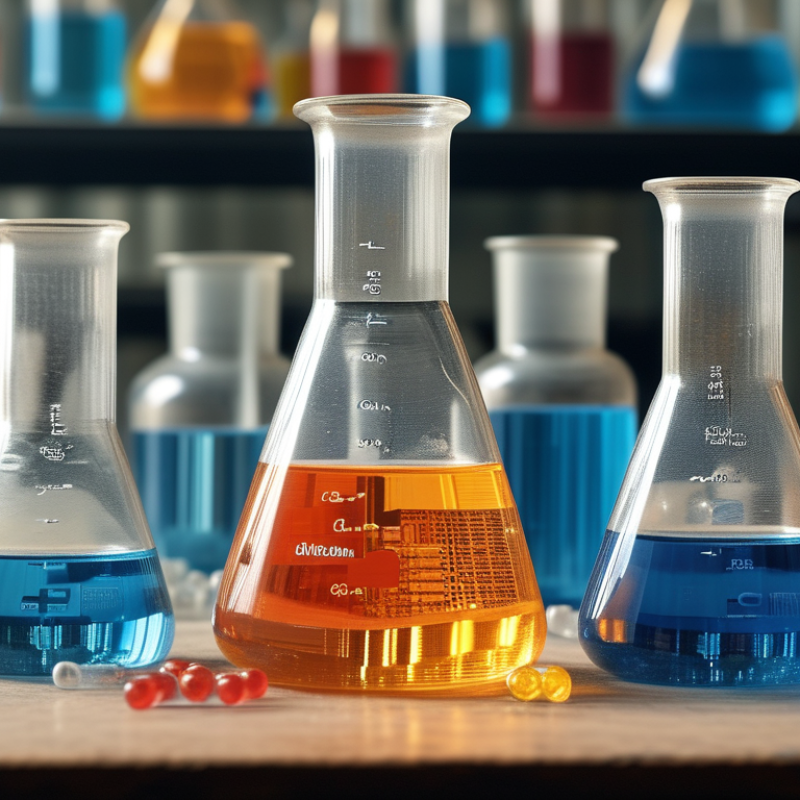
Defining Chemical Synthesis and Its Role in Chemistry
What Is Chemical Synthesis and How Does It Work?
Chemical synthesis is the controlled process of making a new substance from simpler materials. Chemists use reactions to break, join, or rearrange atoms. The goal may be a medicine, a material, a pigment, or a useful research compound.
In practice, synthesis begins with a clear molecular design. A chemist selects starting materials, a solvent, suitable temperature, and sometimes a catalyst. The mixture may change color, form crystals, or release heat. These visible details offer clues, but they do not prove success. Careful testing is essential.
Scientists commonly use spectroscopy, chromatography, and mass measurements to examine the product. These methods can reveal its structure, purity, and quantity. Reproducible procedures also help other researchers check the result. Small changes matter. Stirring speed, moisture, or heating time can alter the outcome.
Chemical synthesis plays a central role in chemistry because it turns molecular ideas into measurable substances. It also helps researchers study how structure affects properties, such as strength, solubility, or biological activity. A planned reaction can still disappoint. The yield may be low, or unwanted compounds may appear. That uncertainty requires patience, accurate records, and honest interpretation. A successful synthesis is not merely a product in a container. It is a tested explanation of how that product was formed.
Choosing Starting Materials and Planning a Synthetic Route
What Is Chemical Synthesis and How Does It Work?
Choosing Starting Materials and Planning a Synthetic Route
Chemical synthesis turns selected substances into a target compound through controlled reactions. The route begins before any glassware is cleaned. A chemist defines the target structure, required purity, scale, and available equipment. Starting materials should be chemically suitable, stable, traceable, and realistically obtainable. Cost matters, but so do purity, storage conditions, and waste.
Retrosynthetic analysis helps break the target into simpler fragments. Each proposed disconnection should suggest a reaction with known behavior and acceptable risk. Check functional-group compatibility, stereochemical demands, reaction temperature, and possible side products. A useful route often has fewer difficult steps, not merely fewer steps. Literature procedures provide evidence, but they are not guarantees. Small changes in concentration, mixing, or moisture can alter the result.
Plan checkpoints before starting. Define how conversion and purity will be measured, using suitable analytical data at each stage. Keep a backup route when a key transformation depends on narrow conditions or scarce material. Safety review should cover hazards, pressure, heat, exposure, and waste handling. Start small. Some plans look elegant on paper and disappoint in the flask. That is normal. Record failed observations rather than hiding them; they improve the next decision. A careful synthesis is both chemical design and a sequence of tested, revisable judgments.
Understanding the Steps of a Chemical Reaction
What Is Chemical Synthesis and How Does It Work?
Chemical synthesis is the controlled process of making a new substance from simpler materials. Its purpose may be to create a useful compound, study molecular behavior, or improve an existing process. A reliable synthesis begins with a clear target and a proposed reaction pathway. Chemists often work backward from the target structure, identifying bonds that could be formed efficiently and safely.
The reaction itself follows several connected steps. Researchers select suitable starting materials, solvents, catalysts, temperature ranges, and reaction times. They then combine the materials under approved safety procedures and monitor changes using analytical methods. Color, gas formation, temperature, or a small sample may reveal progress, but appearance alone is not proof. After the reaction, the mixture undergoes workup and purification. The final material is checked through measurements such as mass, melting behavior, or molecular analysis. Yield matters, but purity and repeatability matter too. Real laboratory work is less tidy than diagrams suggest. A planned route can still fail.
Tips: Keep detailed records of every change. Label samples clearly. Use controls when possible. Never assume a reaction worked because the mixture looks different. Reviewing unexpected results often exposes weak assumptions in the original plan. That reflection improves the next experiment.
Controlling Conditions and Separating the Products
Chemical synthesis builds a target substance by rearranging atoms through controlled reactions. The reaction vessel may look quiet, but temperature, pressure, mixing speed, and acidity constantly shape the outcome. A five-degree increase can accelerate conversion while also creating unwanted by-products. Small changes matter. Operators therefore monitor heat release, colour, viscosity, and gas formation during the reaction. Sensors provide data, but experienced chemists still interpret unusual patterns. A clean equation can hide messy behaviour.
Separation begins early. After synthesis, the mixture may contain the desired compound, starting materials, catalysts, water, and trace impurities. Filtration removes solids, while distillation separates liquids through boiling-point differences. Crystallisation can produce purer solids, but cooling too quickly may trap impurities inside the crystals. In some processes, extraction or membrane separation offers better control. The United Nations Environment Programme reported that global chemical production reached about 2.3 billion tonnes in 2017 and could nearly double by 2030. That scale makes efficient separation more than a laboratory concern. It affects energy use, waste, and production reliability. The International Energy Agency identifies chemicals as one of the largest industrial energy-consuming sectors, strengthening the case for lower-temperature methods and solvent recovery. In practice, no single condition is always optimal. A process may save energy yet reduce yield. That weakness deserves attention. Careful testing, documented deviations, and repeated measurement keep the final product dependable.
What Is Chemical Synthesis and How Does It Work?
Chemical synthesis combines starting materials through controlled conditions such as temperature, pressure, solvent choice, and reaction time. After the reaction, differences in physical properties help separate the desired product from unreacted materials and by-products.
How to read the chart: Boiling point is a useful property for planning distillation. Components with sufficiently different boiling points can be separated by heating the mixture and collecting vapors at controlled temperatures. Values shown are approximate normal boiling points at 1 atmosphere of pressure.
Evaluating Purity, Yield, and Practical Applications
Chemical synthesis builds a target substance through controlled reactions. Chemists select starting materials, solvents, catalysts, temperature, and reaction time. The process may look simple on paper. It rarely is.
Purity and yield must be measured separately. A reaction can produce 95% yield while containing unwanted by-products. High purity with poor yield can also waste materials and energy. Analytical teams commonly use chromatography, spectroscopy, and mass spectrometry to confirm composition. ICH Q3A(R2) requires impurity reporting based on dose and threshold levels, showing why “pure” needs a defined measurement. The OECD Global Plastics Outlook reported that global plastic production reached 460 million tonnes in 2019, nearly double its 2000 level. At this scale, small yield losses become significant.
Applications shape the evaluation method. Pharmaceutical synthesis demands strict impurity control, while polymer production often prioritizes consistency, throughput, and material performance. The International Energy Agency identifies chemicals as the largest industrial energy consumer, making solvent recovery and lower-temperature processing practical concerns. A laboratory reaction may achieve 88% isolated yield, but its industrial version could perform differently because mixing, heat transfer, and purification change. This is where published data can mislead. Experience still matters. A clean chromatogram does not prove a process is economical, and a high yield does not guarantee safe, reliable performance.